

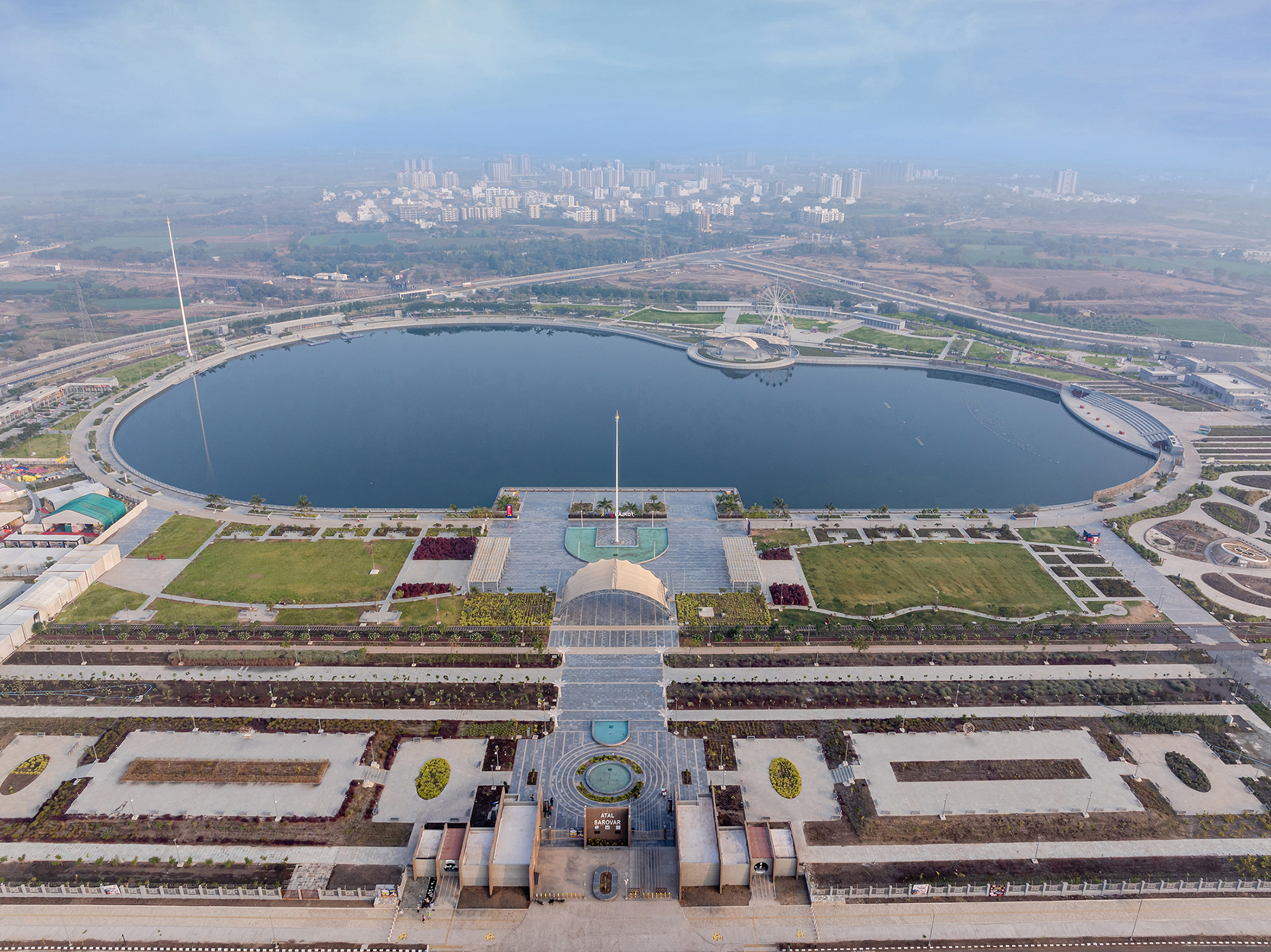


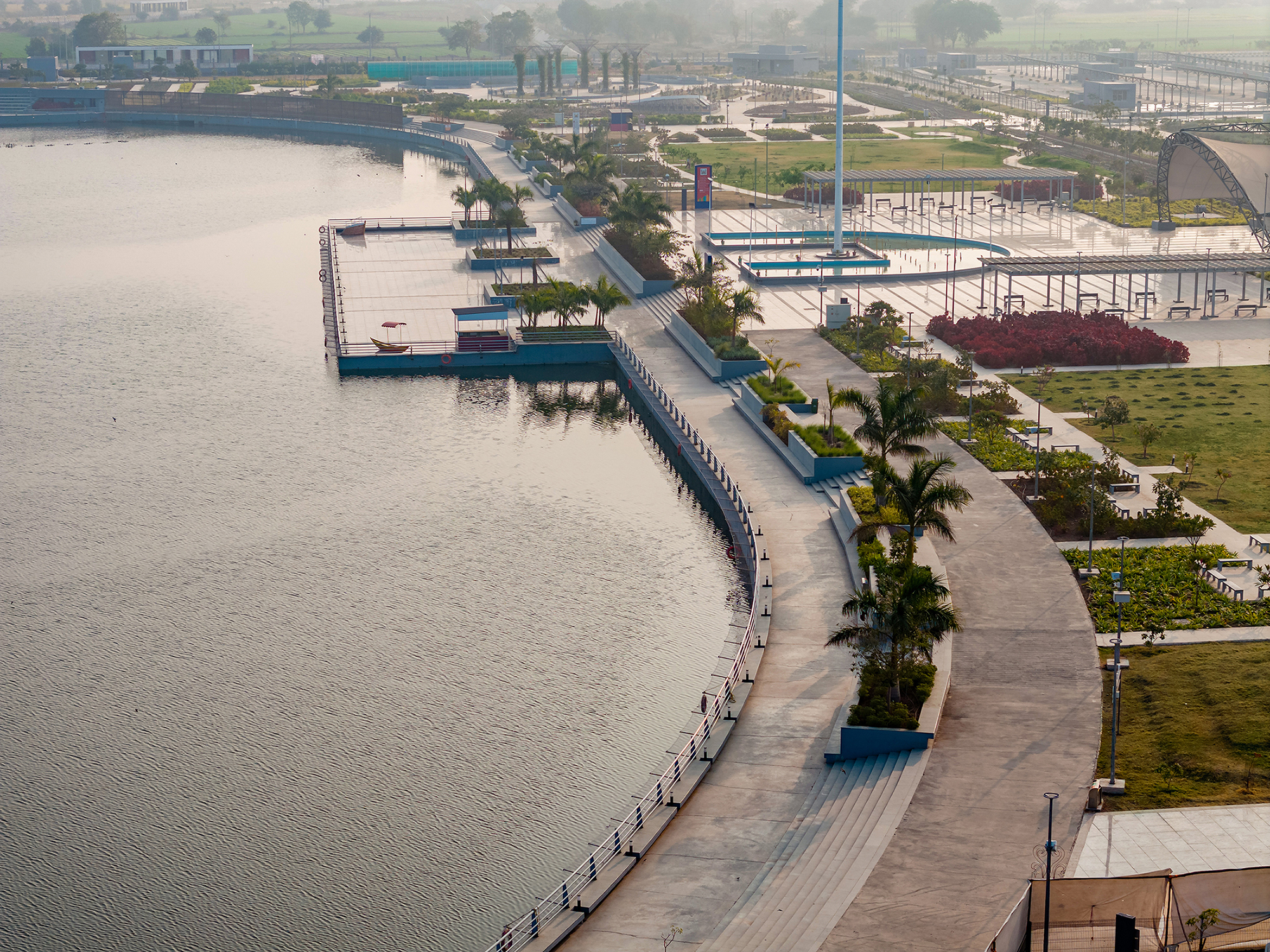
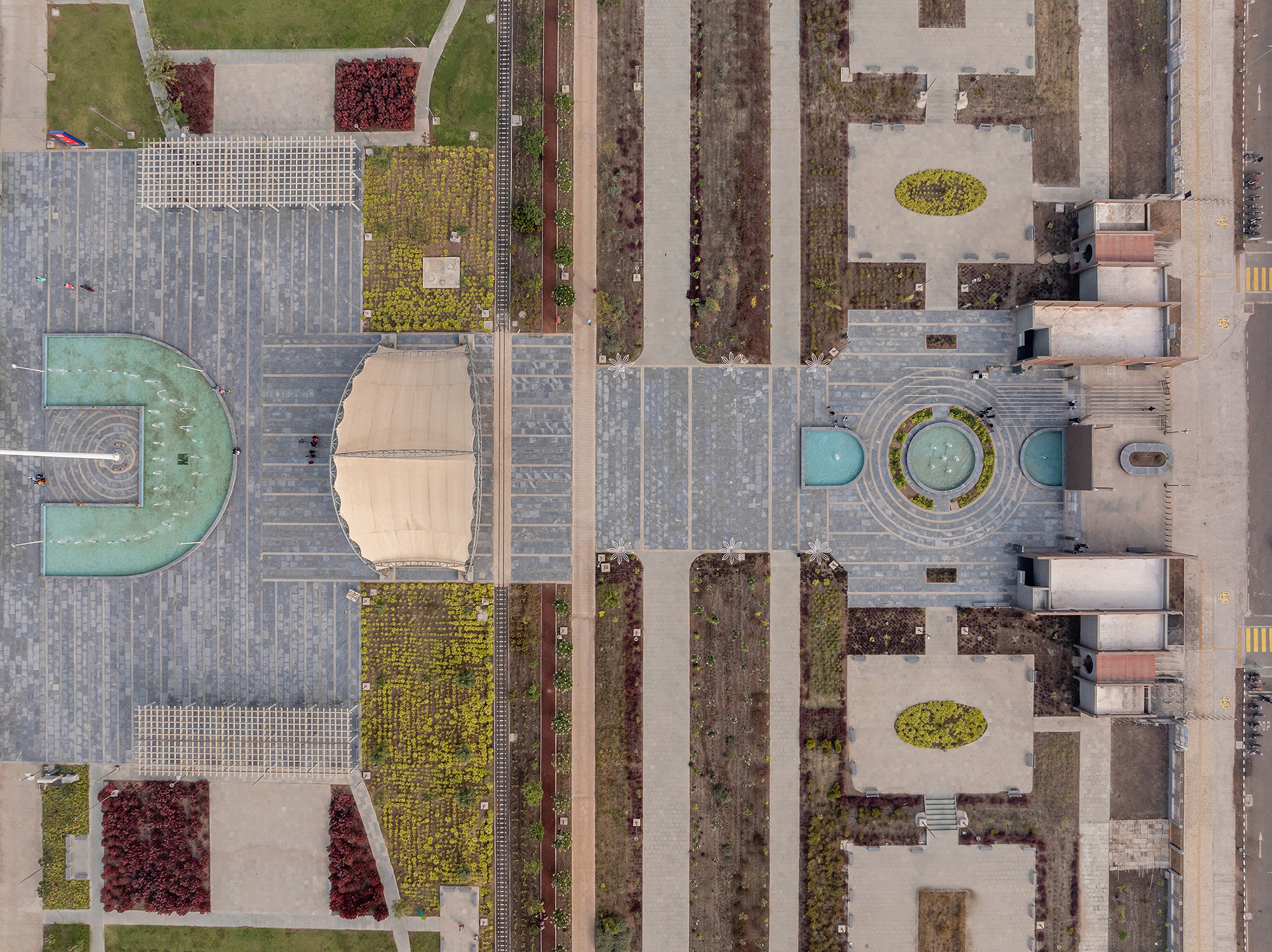
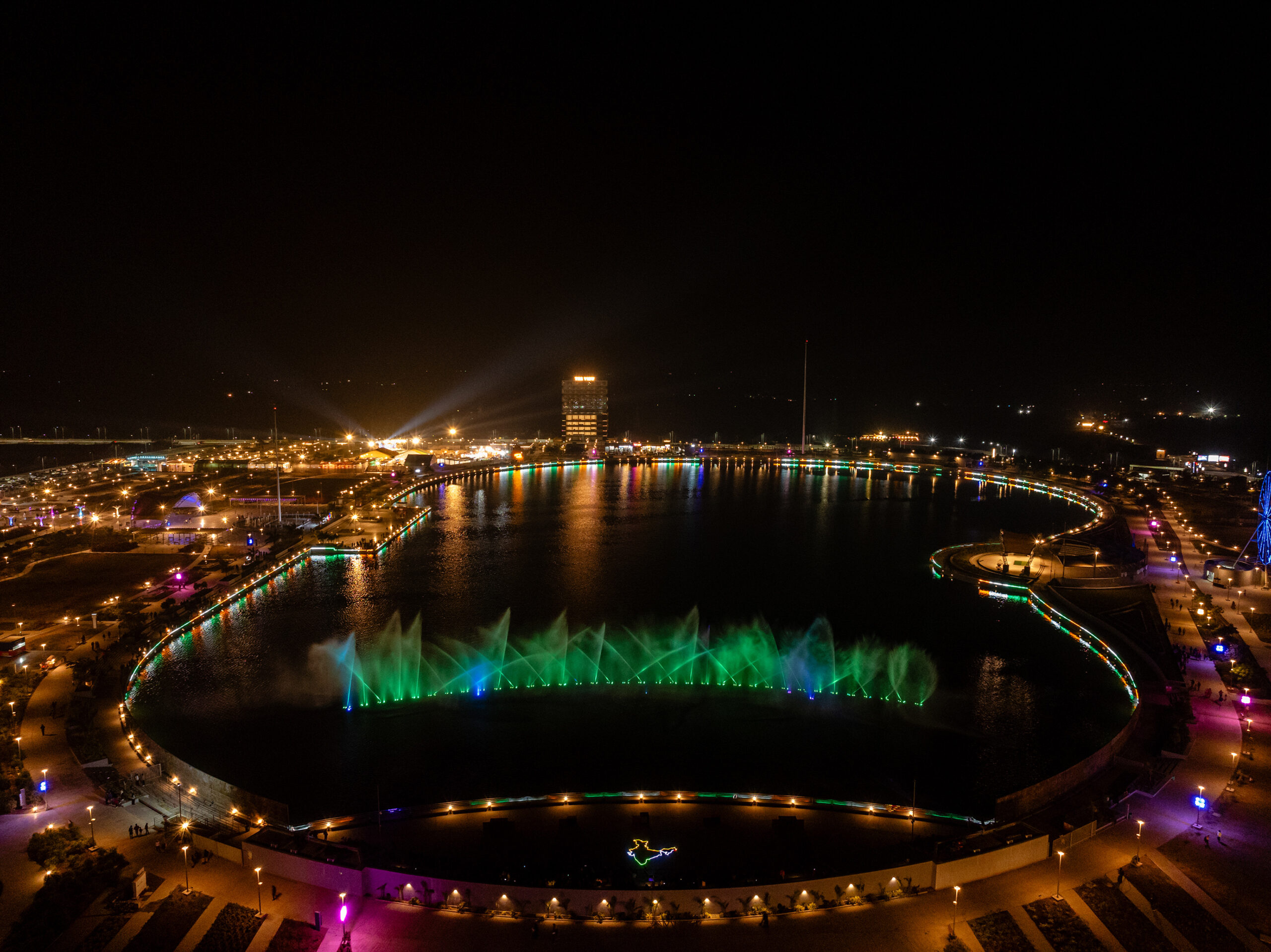

Atal Sarovar—a rejuvenated urban lake named after India’s former Prime Minister Atal Bihari Vajpayee—is a flagship project within the 930-acre greenfield Rajkot Smart City. The erstwhile low-lying natural depression is transformed into a 75-acre multifunctional urban waterbody that integrates stormwater management, ecological regeneration & vibrant public spaces. Conceived through principles of water-sensitive urbanism, it repositions urban hydrology as a driver of sustainable design & inclusive city-making.
Guided by hydrological & environmental studies, the lakebed was recontoured to improve retention & water quality, fed by stormwater & tertiary-treated sewage via an integrated drainage network. Outflow structures designed for a 100-year return period ensure flood resilience, while SuDS measures—bioretention cells, permeable pavements—merge engineering with ecology. Edges were stabilized using stone pitching and native grading. Locally sourced stone, stabilized earth & recycled materials shaped embankments, walkways & decks. Linked to two other lakes and Nyari Dam, the system boosts regional water resilience, supported by real-time sensors, solar lighting and CCTV.
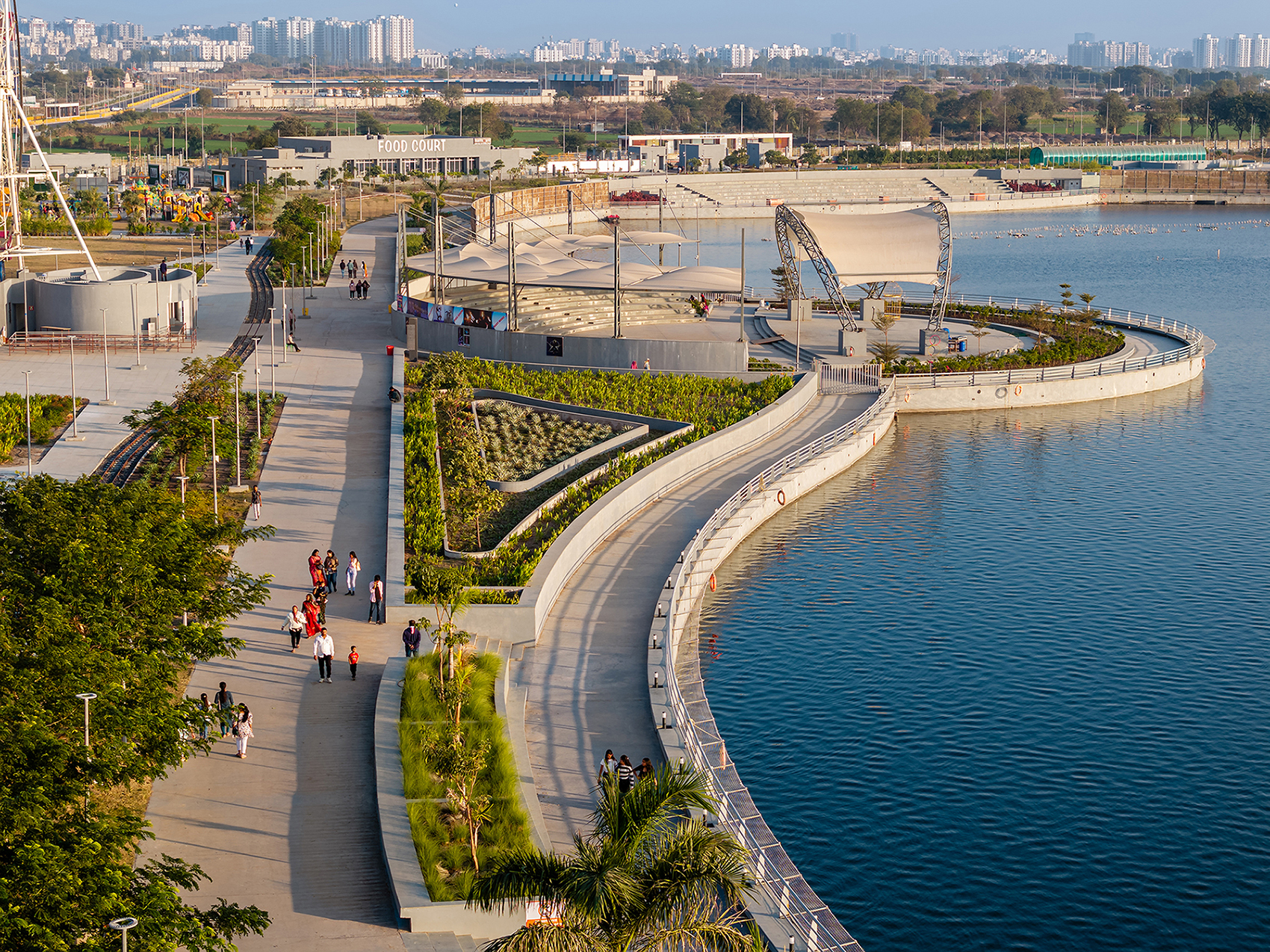
The master plan involved deepening the lake, creating embankments, and incorporating recreational amenities like theme parks & organic trails. A key aspect was the introduction of non-motorized blue-green network & infrastructure, ensuring a synergy between water management & ecological resilience.
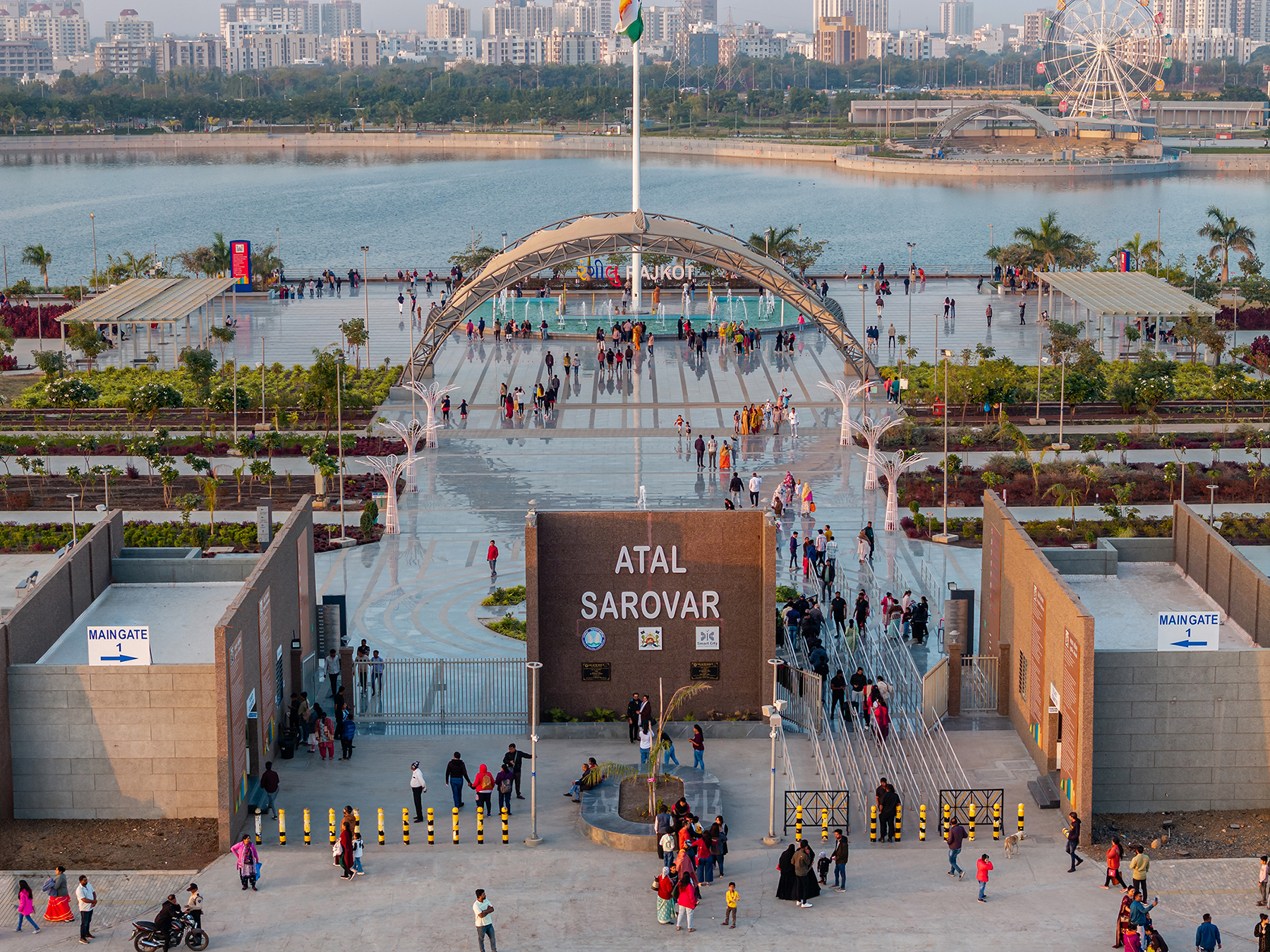
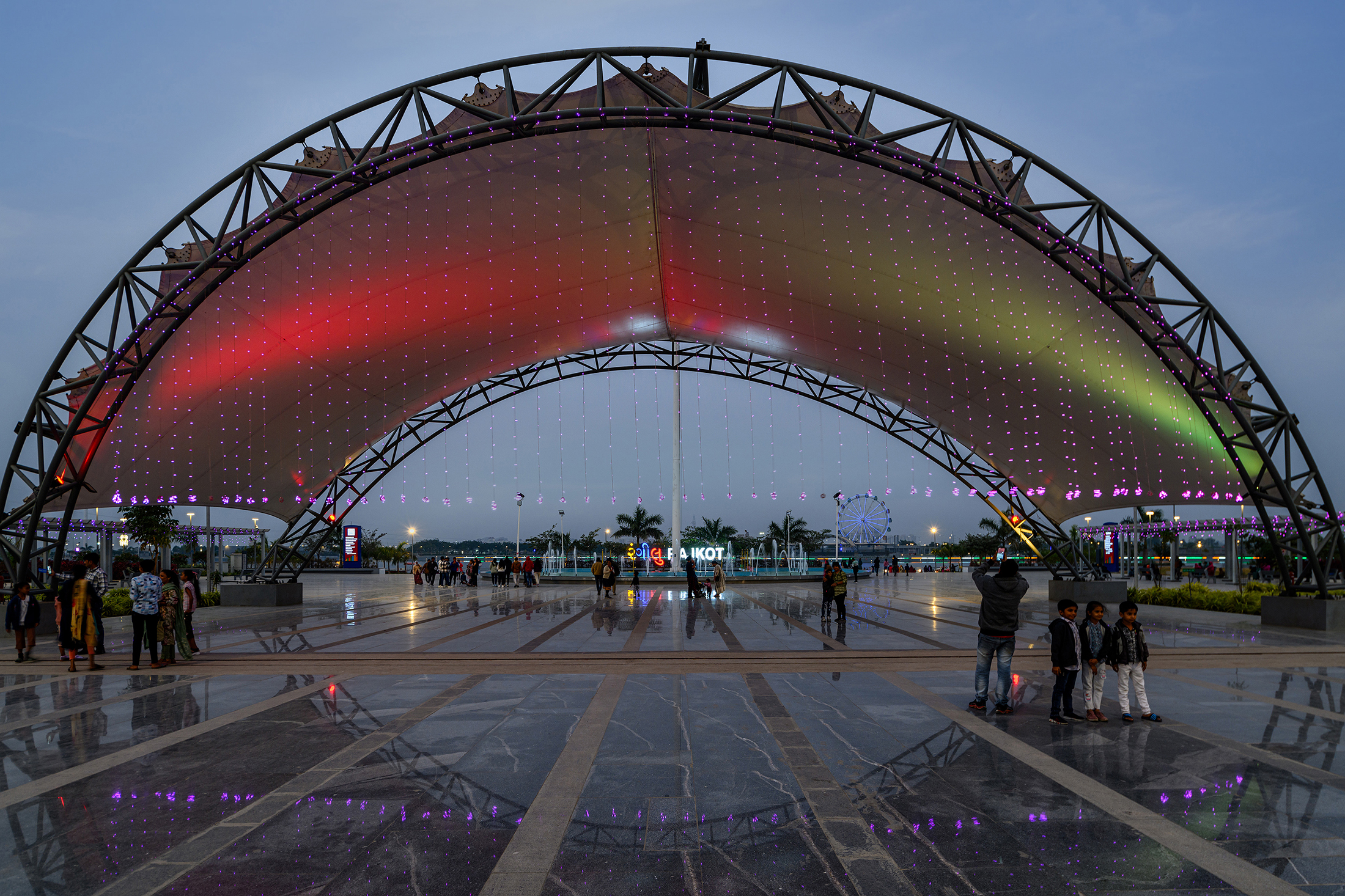
Beyond its environmental role, Atal Sarovar is now a focal point for community life, hosting cultural events, daily gatherings & leisure activities that enhance urban livability. This sustainable public space that blends ecological integrity with functionality, has attracted new investments. Its transformation from a neglected waterbody to a vibrant urban oasis showcases the potential of water-centric design, demonstrating that with visionary planning, urban spaces can thrive as centres of environmental health and community well-being.