




Regenerative Vegan House
Yakushima, located in the south of the Japanese archipelago, receives a lot of rain throughout the year and takes advantage of high rainfall and mountainous terrain to supply almost 100% of its electricity demand through hydroelectric power.
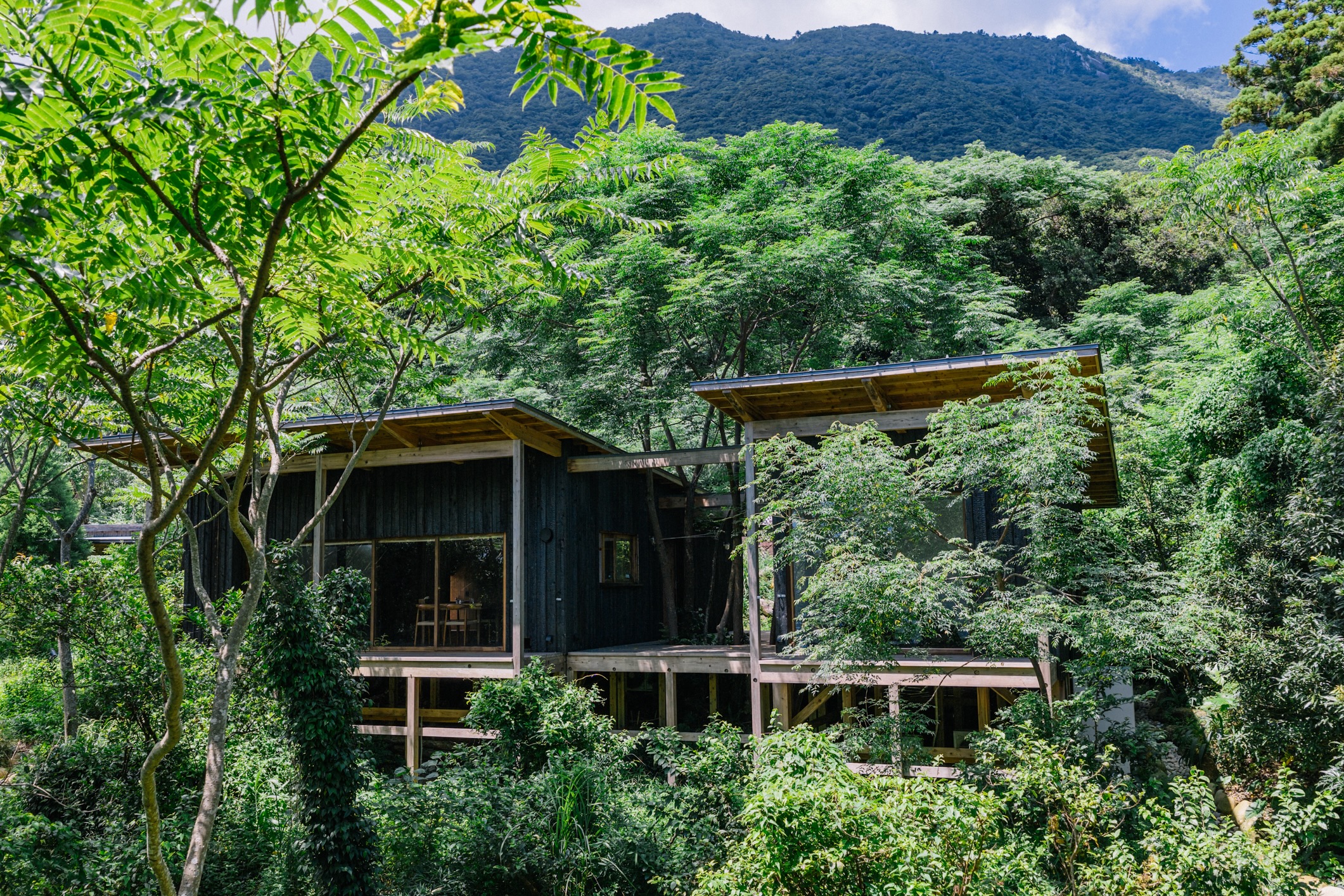
The building, which is positioned to make use of the existing vegetation, rocks and natural spring water, it is a regenerative house that not only allows the residents to feel close to nature, but also aims to positively contribute to the natural cycle and enrich it.
This building, which is made from natural, plant-based materials and has a low environmental impact, can also be called a “Vegan House,” as it is in-tune with the lifestyle of the residents. Its ethical framework that respects life is a concept that redefines the principles of sustainability to date.
The rule of regenerative vegan house:
1. Plant-Based Materials – No animal-derived products
2. Ethical Integration – Protecting habitats and
fostering symbiosis
3. Regenerative Practices – Restoring and
enriching the environment
“Vegan House” respects all life.
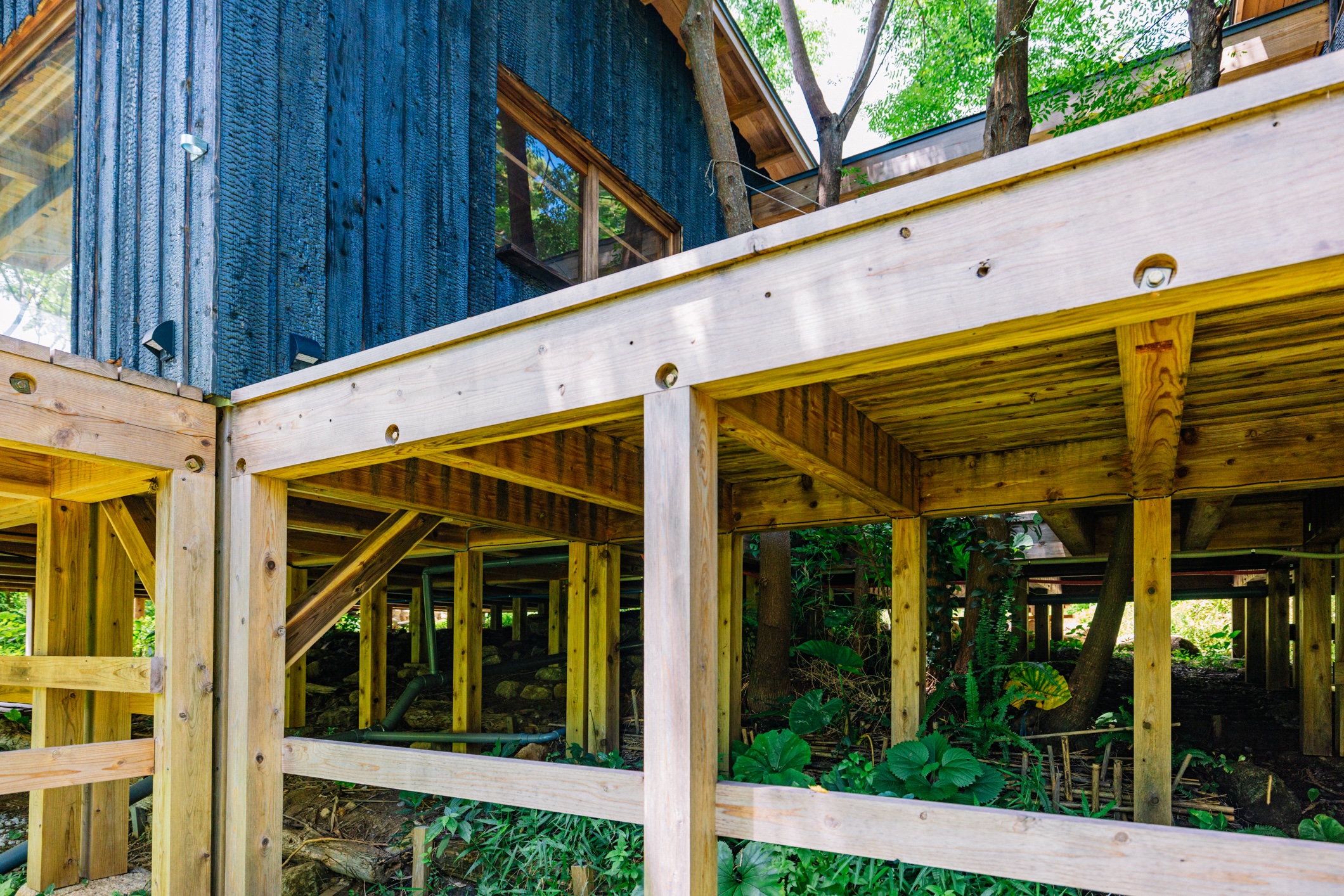
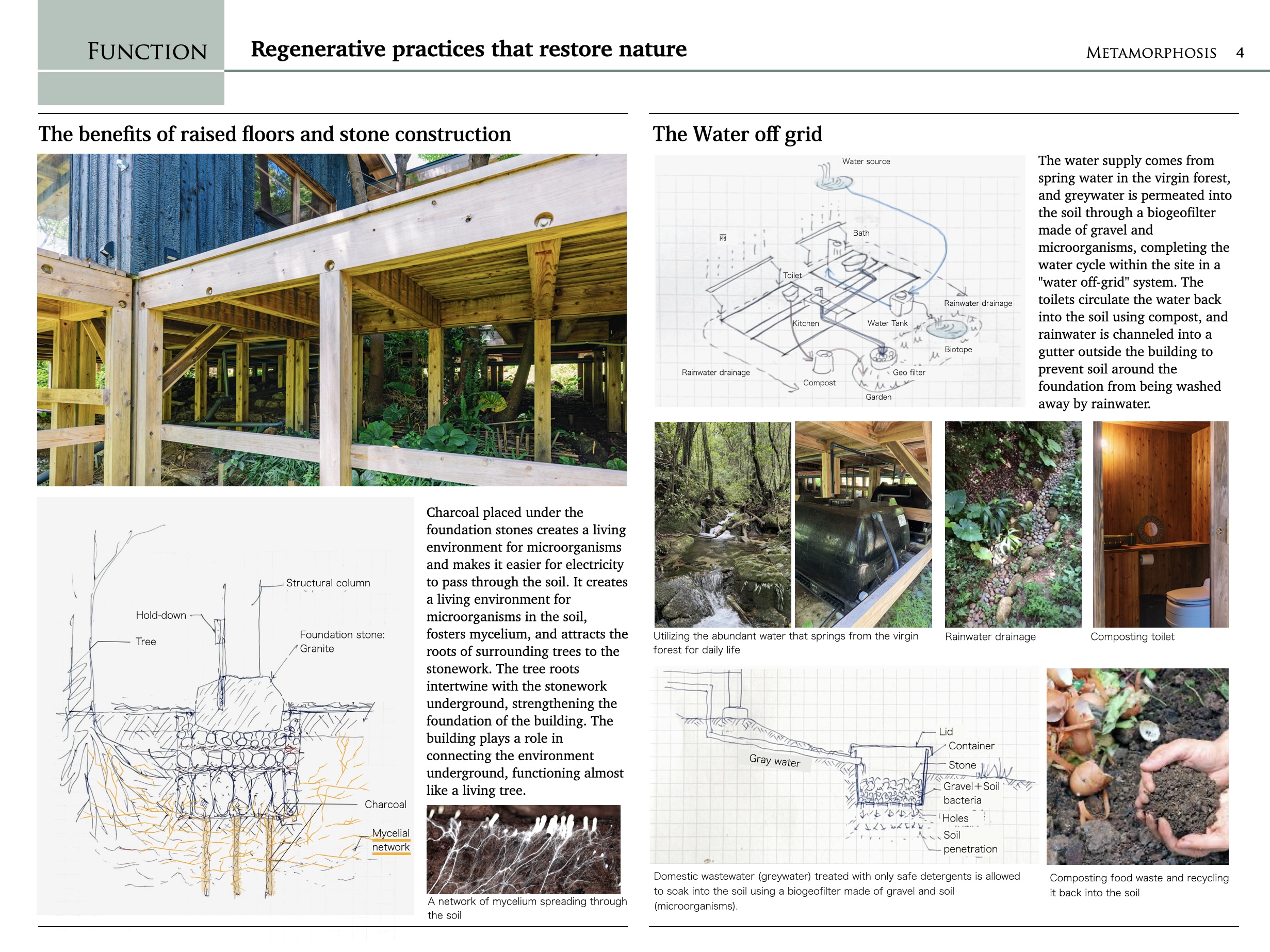
It nurtures the underground environment through the traditional Japanese ishibadate—a dry-laid stone foundation without concrete. Using granite from the site, the base is layered with stones enriched with charcoal and organic matter, an ancient Japanese wisdom.
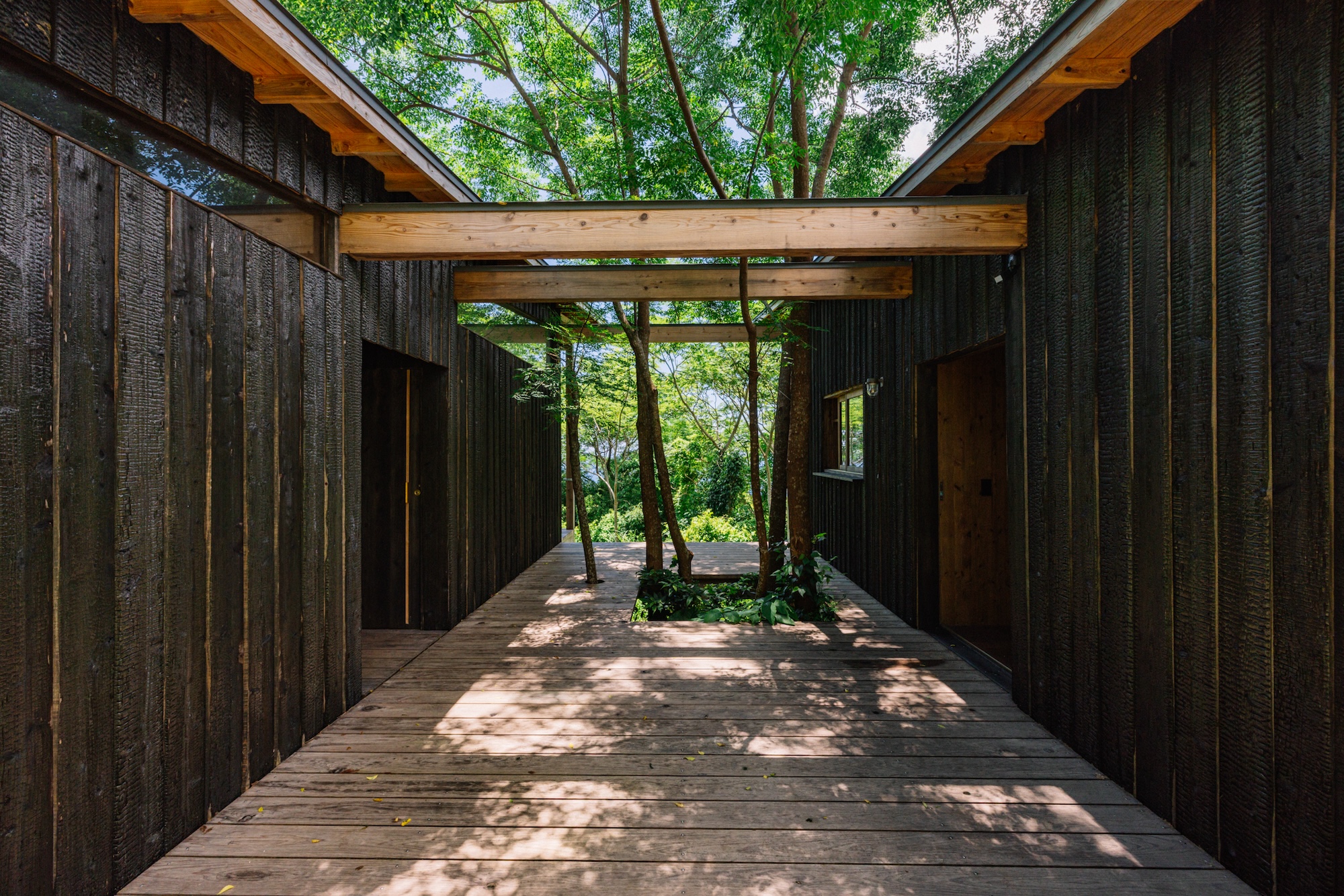
The design shapes the distance between nature and daily life, separating human and animal paths to enable coexistence. Poised as if floating on the sloping terrain, the house coexists with local wildlife.
Effects of Vegan Materials
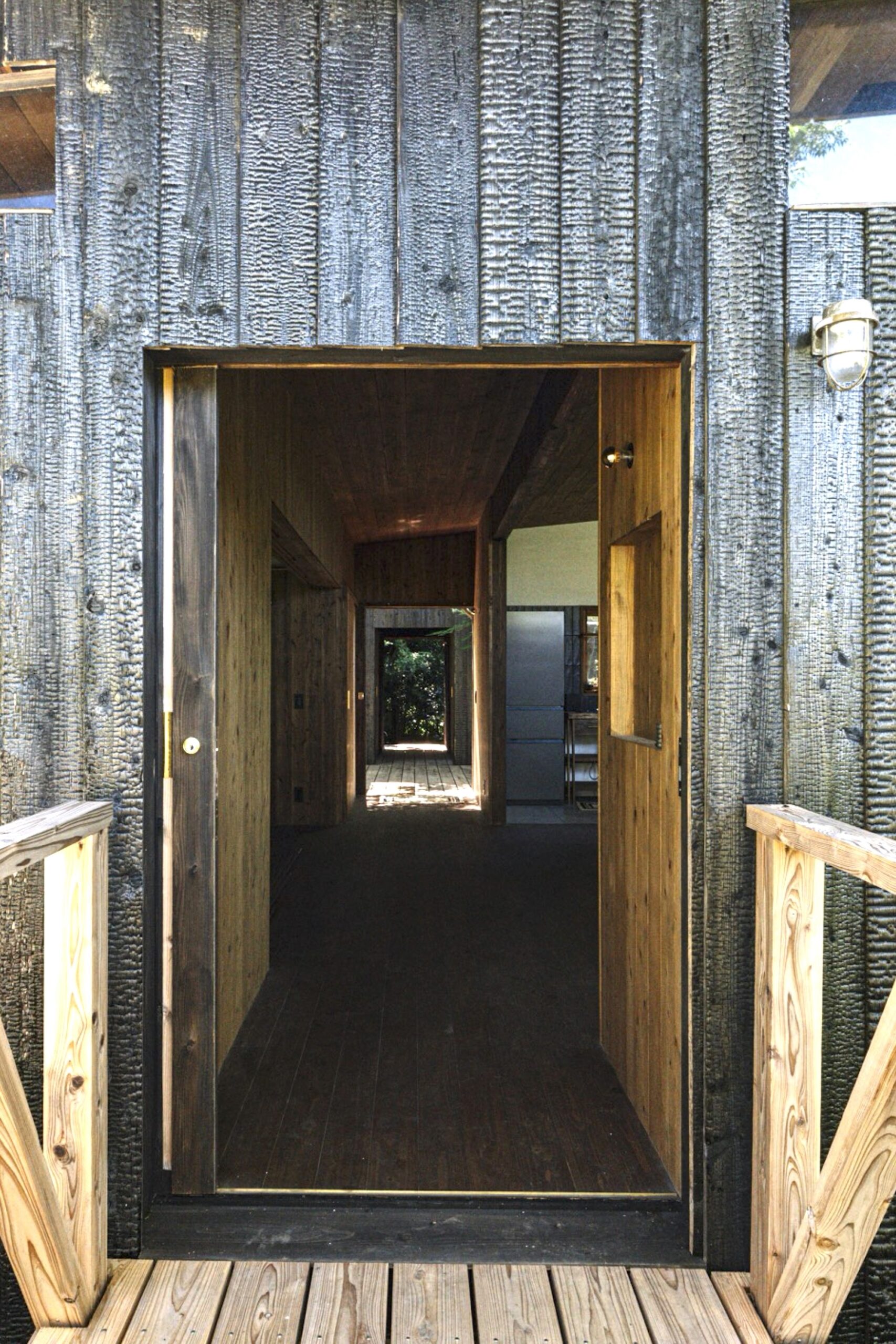
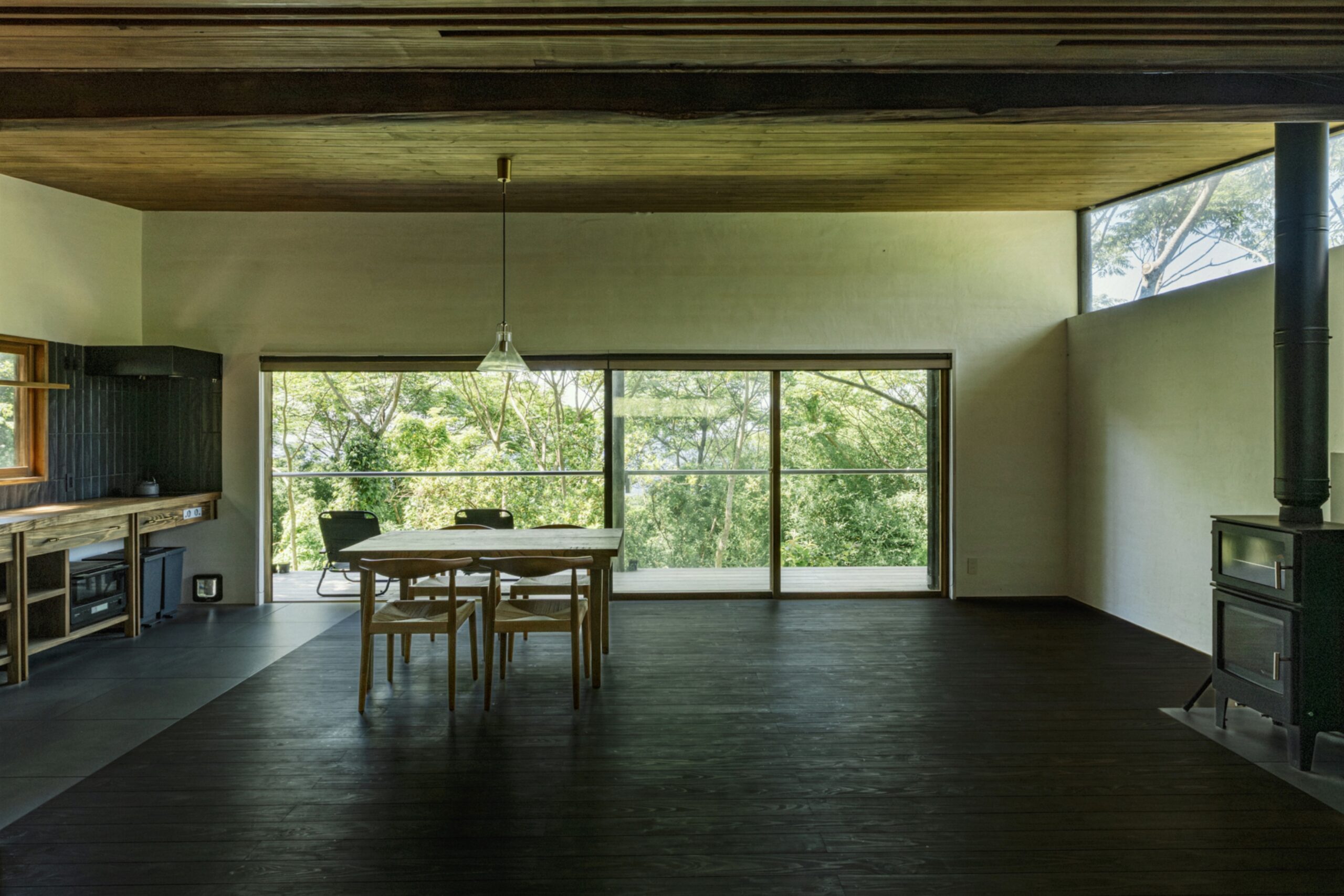
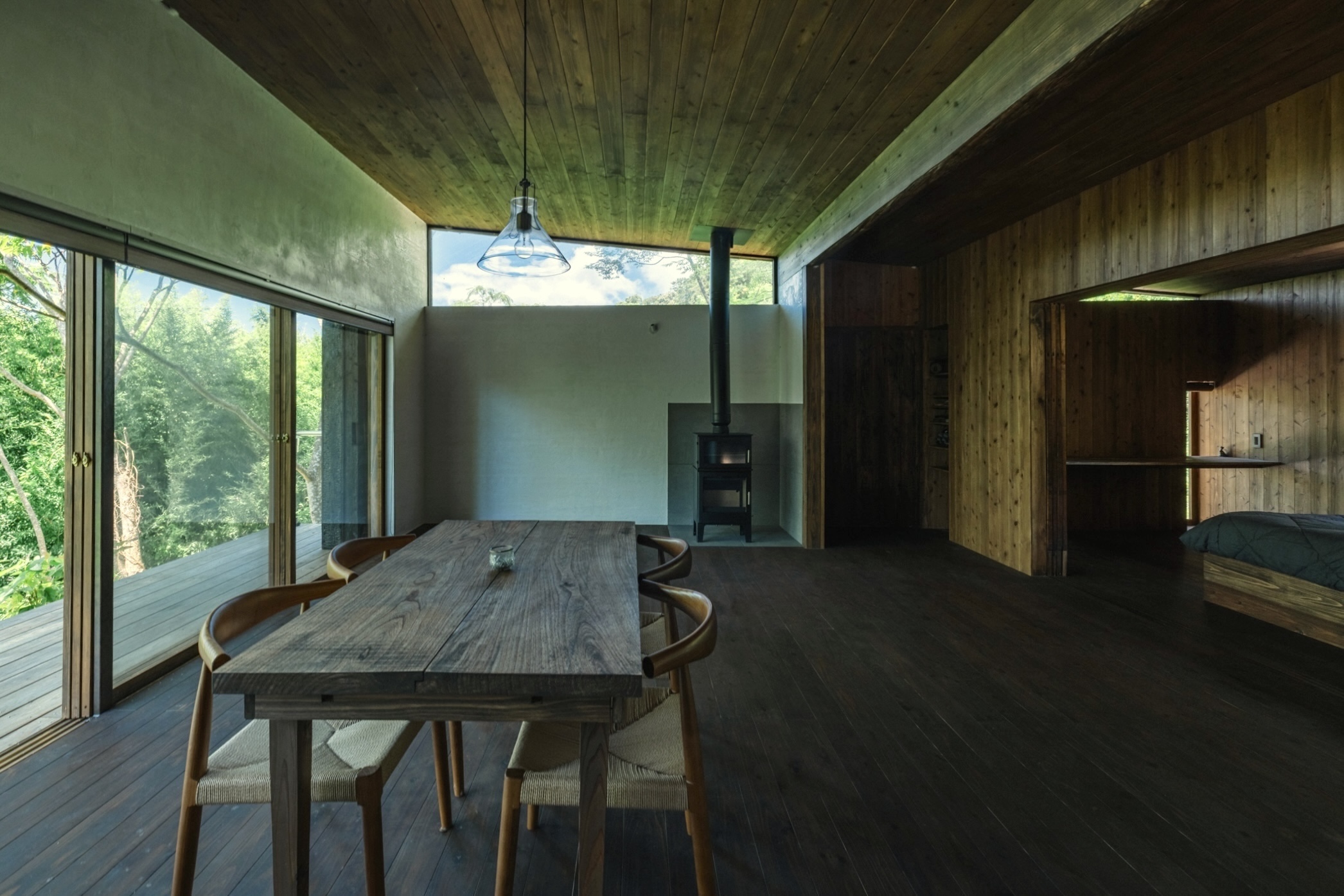
Using plant-based resources such as charred cedar, hemp-fiber insulation, and local cedar with natural plaster creates a comfortable living environment.
Sustainability for next 100 years
Architecture born from the land and destined to return to it. Building with materials sourced from the site allows repairs with local resources and ensures that, when dismantled, nothing becomes waste—everything returns to the land.